Friday, July 17, 2026 · 02:37 CEST · Berlin

Author: editorial staff

  • Germany Faces Highest Wildfire Warning Level This Weekend

    Germany Faces Highest Wildfire Warning Level This Weekend

    Forest fire danger is rising sharply across Germany this weekend. The German Weather Service (Deutscher Wetterdienst, DWD) says parts of the southwest will reach warning level five — the highest on its scale — as a heatwave grips the region. The risk is expected to spread further east and north into Sunday.

    The wildfire risk at a glance

    • Highest level (5): forecast for Saturday along the border area between Baden-Württemberg, Rhineland-Palatinate and France, where temperatures are currently highest.
    • Level 4: covers nearly all of Baden-Württemberg, southern Rhineland-Palatinate, southern Hesse and northern Bavaria until Tuesday, plus pockets of western North Rhine-Westphalia and eastern Brandenburg.
    • Level 3 (“medium risk”): applies to most of the rest of the country.
    • Sunday: the high-risk zone widens to include southern Baden-Württemberg and the outskirts of Berlin, while a diagonal band from the northwest to the southeast sees lower risk.

    Where the risk is highest

    According to DWD maps, larger and larger areas turn red on the forest fire danger index as the weekend goes on. The southwest is affected first, with the north-east following later. On Saturday, the greatest danger is at the border between Baden-Württemberg and Rhineland-Palatinate and the French border, an area currently experiencing especially high temperatures. Level four, one step below the maximum, applies across almost all of Baden-Württemberg, southern Rhineland-Palatinate, southern Hesse and northern Bavaria through Tuesday, along with isolated areas in western North Rhine-Westphalia and eastern Brandenburg.

    By Sunday, the danger zone expands further. In addition to the French border region, the DWD also classifies the southern part of Baden-Württemberg and the outer districts of Berlin as high-risk areas. A diagonal stretch of the country running from the northwest to the southeast shows comparatively lower risk on the same day.

    Why fires are becoming more common

    Germany’s rising wildfire risk comes as southern European countries, including Spain and France, battle serious forest fires of their own. A fire in southern Spain killed at least a dozen people, one of the deadliest in the country’s recorded history, after a severe heatwave swept across much of Europe.

    Wildfires have killed hundreds of people across Europe over the past decade, and scientists expect that toll to grow. Europe is the fastest-warming continent on Earth: since the 1980s, temperatures there have risen at roughly twice the global average, according to the EU’s Copernicus climate programme. Globally, 2025 was the third-hottest year on record. Researchers warn that climate change is making regions more vulnerable to forest fires.

    What it means for people living in Germany

    If you live in or are travelling through the affected regions — particularly the southwest, Bavaria, or the edges of Berlin and Brandenburg — it is worth checking the DWD’s forest fire danger index (Waldbrandgefahrenindex) before heading into wooded or rural areas over the weekend.

    • Avoid open flames, barbecues, and discarded cigarettes in or near forests and dry grassland — these are common causes of wildfires.
    • Follow any local fire bans or restrictions announced by municipal authorities or forestry offices.
    • If you spot smoke or fire, call the fire brigade on 112 immediately rather than assuming someone else has already reported it.
    • Be cautious with vehicles and machinery in rural areas, as hot exhaust parts can ignite dry vegetation.

    Data cited from the Deutscher Wetterdienst (German Weather Service) and the EU’s Copernicus climate programme.

    Understand Germany, in plain English. Sign up for The New German newsletter for the news that matters to internationals living here.
  • German Inflation Falls to 2.3% in June, Fuel Set to Rise

    German Inflation Falls to 2.3% in June, Fuel Set to Rise

    Germany’s annual inflation rate slowed to 2.3% in June 2026, down from 2.6% in May and 2.9% in April, as cheaper fuel and flat food prices offset rising costs for services — but the relief may be short-lived, according to the Federal Statistical Office (Statistisches Bundesamt).

    The drop was driven mainly by fuel. A cooling in the Iran conflict pushed global oil prices back toward pre-crisis levels, and a temporary fuel discount (Tankrabatt) kept pump prices down. As a result, fuel costs in Germany rose just 11.3% year-on-year in June, compared with 18% in May and around 26% in April. Overall energy costs (household energy and fuel combined) were up only 3.4% in June, versus 6.6% in May and 10.1% in April. But the Tankrabatt ended in late June, and the Bundesbank estimates it had dampened inflation by about a quarter of a percentage point while it lasted. Renewed war in the Middle East, following US attacks, has already driven oil prices back up. On Thursday, the nationwide average price for diesel hit €2.012 per liter, according to the ADAC — the first time above €2 since mid-May, and 4.2 cents higher than the day before. Since the start of that week, diesel had climbed 6.2 cents. Petrol prices rose sharply too.

    Food prices rose just 0.4% in June, below the overall inflation rate. Cooking fats and oils fell 14.7%, dairy products fell 6.2%, butter dropped 29.1%, and potatoes fell 8.8%. But eggs jumped 14.6%, sugar, jam, honey and other sweets rose 4.8%, fish and seafood rose 3.3%, and meat rose 2.4%. KfW economist Stefanie Schoenwald warned that high fertilizer prices and a looming severe El Niño could soon end this favorable trend for food. Core inflation, which excludes food and energy, stood at 2.5% — higher than the headline rate.

    Services remained a major driver of price increases, up 3.1% in June, the same as in May. Prices rose especially in social care facilities (+6.8%), car repair shops (+4.8%) and at hairdressers (+4.2%). Net cold rents (Nettokaltmieten, rent excluding utilities) rose 1.9%, below the overall inflation rate.

    What this means for you

    If you’re budgeting in Germany, don’t expect this dip to last: fuel and energy costs are already climbing again as the Tankrabatt has ended and Middle East tensions push oil prices higher. If you cook at home, you’ll likely notice cheaper butter, dairy and potatoes but pricier eggs, fish and meat. And if you rely on services like hairdressers, car repairs or care facilities, expect continued above-average price rises. Rent, at least for now, is rising more slowly than prices overall.


  • Germany Toughens Liability Rules for E-Scooter Accidents

    Germany Toughens Liability Rules for E-Scooter Accidents

    Germany’s Bundestag has passed a law that makes it easier for people hurt in e-scooter accidents to get compensation, extending to e-scooters the same strict liability rules that already apply to cars and other motor vehicles.

    The change responds to a sharp rise in e-scooter accidents. Until now, victims often had to cover their own medical costs because e-scooters were exempted from the tougher liability rules that apply to other motor vehicles. “There is simply no reason to treat the rental of e-scooters differently under liability law than the rental of cars,” said Justice Minister Stefanie Hubig (SPD). “Anyone who makes money renting out e-scooters must also take responsibility for the damage their vehicles cause,” she said.

    The law introduces no-fault liability for e-scooter fleet operators, known as Halterhaftung (registered-keeper liability). This means the company that owns a rental fleet must cover accident costs whenever the person actually responsible for the accident cannot be identified or held liable.

    The rules also change how accidents with parked e-scooters are handled. People injured by a parked scooter no longer have to prove that the last rider left it incorrectly parked.

    Why this is happening

    E-scooters have been allowed on German public roads since summer 2019, and accidents involving them have risen sharply since then, according to the federal government. In 2024, there were around 12,500 accidents involving e-scooters, and in more than 7,900 of those cases the e-scooter rider was at fault, the Transport Ministry reported. The number of e-scooter accidents has doubled since 2021.

    What this means for you: If you rent e-scooters regularly, or if you’re a pedestrian or cyclist who could be hit by one, this change is meant to make it easier to get your costs covered after an accident, especially if the rider can’t be tracked down. It also removes the burden of proving a scooter was parked carelessly if you trip over one on the pavement.


  • Heating Law Germany – Rolls Back allows New Gas and Oil Boilers Again

    Heating Law Germany – Rolls Back allows New Gas and Oil Boilers Again

    Germany’s Bundestag and Bundesrat have passed a new law that undoes one of the previous government’s most controversial climate rules. The Gebäudemodernisierungsgesetz (Building Modernisation Act), approved on 10 July 2026, allows new gas and oil heating systems to be installed again — something the old rules had effectively ruled out.

    The new heating law at a glance

    • What changed: Bundestag and Bundesrat passed the Gebäudemodernisierungsgesetz on 10 July 2026, replacing stricter rules from the previous government.
    • New gas/oil boilers: Allowed again, alongside heat pumps, district heating, hybrid systems and biomass heating.
    • Rising fuel quota (“Bio-Treppe”): New gas and oil systems must use at least 10% climate-neutral fuel from January 2029, 15% from 2030, 30% from 2035, and 60% from 2040.
    • Existing boilers: A “green gas quota” (Grüngasquote) starts in 2028, beginning at up to 1%.
    • Landlords: Must help cover ongoing heating costs if they install a new gas or oil system.
    • Long-term goal: All heating must run on climate-neutral fuel by 2045, when Germany aims to be climate-neutral overall.
    • Legal challenge: Environmental group Deutsche Umwelthilfe has announced it will file a constitutional complaint.

    What the old law required

    The previous, so-called “Ampel” coalition government (SPD, Greens and FDP) had passed a heating law requiring new systems to run on at least 65% renewable energy. In practice, that made it almost impossible to install a new gas or oil boiler. The new government argues that Germany’s climate targets can still be met if conventional boilers are gradually switched to biomethane, bio-gas, bio-oil or hydrogen instead.

    The “bio-staircase”: a rising fuel quota

    Under the new law, homeowners can still choose a heat pump, a district heating connection, a hybrid system or a biomass heater. But new gas and oil boilers remain an option too — as long as they run on an increasing share of CO2-neutral fuel, starting 1 January 2029. The government calls this the “Bio-Treppe” (bio staircase):

    • At least 10% climate-friendly fuel from January 2029
    • At least 15% from January 2030
    • At least 30% from January 2035
    • At least 60% from January 2040

    For heating systems already installed, a separate “green gas quota” (Grüngasquote) takes effect from 2028, starting at up to 1%. The government has not yet specified further details of how this quota will work.

    Landlords must share the cost

    Because climate-neutral fuels are expected to cost more, landlords who choose to keep using gas or oil heating will in future have to contribute to the ongoing heating costs. Several industry associations have nonetheless warned that tenants could still face higher bills in the long run, pointing to rising CO2 prices and gas network fees (Gasnetzentgelte).

    Sharp political and legal criticism

    Reactions split along familiar lines. Union parliamentary group deputy leader Sepp Müller welcomed the change, saying people have “freedom in the boiler room” again: “We are replacing paternalism with freedom of choice.” Green party parliamentary group leader Katharina Dröge called the reform “an accelerant for the climate crisis,” saying it was “completely oblivious to the future” for the coalition to rely again on climate-damaging oil and gas heating.

    Environmental groups have gone further. Deutsche Umwelthilfe says the law contradicts Germany’s own legal climate targets and has announced a constitutional complaint (Verfassungsbeschwerde). Tina Löffelsend, a climate expert at BUND, said this summer’s heatwaves were “a further wake-up call for more climate protection,” but that the government’s law was instead fuelling the climate crisis. Critics single out two points: that the bio-staircase only reaches a 60% renewable share for new systems by 2040, and that the costs and availability of “green” gases for the green gas quota remain unknown.

    What it means for people living in Germany

    If you’re planning to buy a home, renovate, or negotiate with a landlord, the pressure to install a heat pump immediately has eased. Gas and oil boilers remain a legal option, though from 2029 new installations must increasingly run on climate-neutral fuel — a cost worth asking about before you commit to a system. Tenants whose landlord installs a new gas or oil boiler should note that landlords are now required to help cover the ongoing heating costs, which may be reflected in service charge statements (Nebenkostenabrechnung). Given the warnings about rising CO2 prices and network fees, it’s worth comparing the long-term running costs of a heat pump against a fossil-fuel system before deciding, especially for anyone signing a long lease or buying property.

  • BAfÖG – internationals and natives can hope for increase in 2027

    BAfÖG – internationals and natives can hope for increase in 2027

    Germany’s coalition government has agreed to raise BAföG, the state financial aid that helps students and trainees cover living costs — but the increase will now start in the summer semester of 2027, six months later than originally planned. The parties from the Union and the SPD confirmed the compromise on 9 July 2026, ending months of disagreement over the state’s finances.

    The BAföG deal at a glance

    • New start date: summer semester 2027, not winter semester 2026 as originally planned in the coalition agreement.
    • Housing allowance: rises from €380 to €440 a month for students and trainees who no longer live with their parents.
    • Basic rate (Grundbedarf): rises in two steps — to €503 from winter semester 2027/28, then to €563 from summer semester 2029, reaching the level of basic social security (Grundsicherung).
    • Income thresholds: from the 2028/29 school year or winter semester, the income limits (Freibeträge) that determine eligibility will rise automatically by 1.5% every year.
    • Next step: the federal cabinet is expected to approve the plan at the end of July 2026, research minister Dorothee Bär (CSU) said.

    What’s changing, and when

    BAföG (Bundesausbildungsförderungsgesetz, or federal training assistance act) is Germany’s state support for students and trainees who can’t otherwise afford their studies. The coalition’s compromise raises the monthly housing allowance for those living independently from €380 to €440. The basic living-cost rate for students will then climb in two stages: to €503 a month from the winter semester of 2027/28, and to €563 from the summer semester of 2029 — bringing it up to the level of basic social security (Grundsicherung).

    The coalition agreement had originally targeted the coming winter semester for the increase. That timeline has now slipped by half a year.

    Why the delay

    The increase had been in doubt for some time. The Union pointed to the tight state budget and had ruled out raising several state benefits at once, including citizen’s income (Bürgergeld), housing benefit (Wohngeld), parental allowance (Elterngeld) and BAföG. The compromise announced this week resolves that impasse, though at the cost of a later start date.

    The Deutsches Studierendenwerk (DSW), the umbrella body representing student services in Germany, welcomed the deal as a “good and important signal.” Its chairman, Matthias Anbuhl, told ARD’s Berlin studio that after months of uncertainty, there is now at least a decision. He noted that only around 613,000 students and trainees currently receive BAföG — the lowest number in almost 30 years.

    A simpler, digital application

    Alongside the rate increases, the coalition wants to modernise how BAföG works. Applications should become digital and more user-friendly. As a bureaucracy-reduction measure, students will no longer need to submit proof of academic progress (Leistungsnachweis) from their fifth semester onward. The government also plans a “reliable and transparent” system for reviewing and adjusting support rates going forward, on top of the automatic 1.5% annual rise in income thresholds starting in 2028/29.

    What it means for people living in Germany

    If you’re an international student, german student or trainee in Germany relying on, or considering, BAföG, the practical takeaway is timing: don’t expect higher payments this winter. The extra money — the higher housing allowance and, later, the higher basic rate — only starts from the summer semester of 2027.

    • Eligible EU citizens and some non-EU nationals with long-term residence or certain residence permits can apply for BAföG; check your eligibility with your university’s student services (Studierendenwerk) before assuming you don’t qualify.
    • If your rent already exceeds the current €380 housing allowance, budget for the gap to persist until at least the 2027 increase.
    • Watch for the promised digital application process — it should make applying and renewing BAföG faster once introduced.
    • If you’re past your fourth semester, you may benefit from the planned removal of the academic-progress proof requirement, once it takes effect.


  • Bundestag Passes Statutory Health Insurance Savings Bill – GKV

    Bundestag Passes Statutory Health Insurance Savings Bill – GKV

    Germany’s Bundestag voted on July 10, 2026 to approve a savings package for the statutory health insurance system (gesetzliche Krankenversicherung, or GKV) — a change that will mean higher medication co-payments and new limits on free family coverage for many insured members.

    Of 609 lawmakers who voted, 318 backed the bill from Health Minister Nina Warken (CDU), 284 voted against it, and four abstained. The package combines spending brakes on doctors’ practices, hospitals, pharmacies and the pharmaceutical industry with higher costs for insured members. The Health Ministry had projected a deficit of up to 19 billion euros for statutory insurers next year without the reform, and warned that contribution rates could otherwise rise by one percentage point in 2027.

    Under the final version, co-payments for medications rise from a range of 5 to 10 euros to a range of 7.50 to 15 euros, though a planned annual adjustment of that range was dropped. Free co-insurance for spouses will be restricted, but with wider exceptions than first proposed: it remains available for parents of children under 12, up from under 7 in the original draft. Starting in 2028, members whose partners no longer qualify for free co-insurance will pay a 2.5 percent contribution surcharge. Certain extra payments to doctors, such as for walk-in hours without an appointment, are being scrapped, and increases in hospital reimbursement will be capped.

    What this means for you: If you or a family member is in Germany’s statutory health insurance system, expect higher co-payments for prescription medicines, and check whether a spouse’s free co-insurance status is affected by the new age and income rules. The Bundesrat was due to debate the same bill on July 10; it cannot block the law but could delay it by sending it to a mediation committee.

  • Germany’s June Heatwave Killed an Estimated 5,100 People

    Germany’s June Heatwave Killed an Estimated 5,100 People

    The heatwave that pushed temperatures above 40°C across Germany in late June killed an estimated 5,100 people, according to the Robert Koch Institute (RKI), the country’s federal public health agency. That is already far more than Germany typically records in an entire year — and the summer is not over: the next heatwave is forecast for the coming days.
    The numbers at a glance
    • Estimated heat deaths since mid-June: about 5,100 (RKI; range 4,410–5,850 for April to June 28).
    • Deadliest week: June 22–28 alone accounted for roughly 4,310 deaths.
    • For comparison: Germany averaged about 2,900 heat-related deaths per whole year from 2023 to 2025.
    • Most affected: people over 75 — around 2,950 of the dead were 85 or older; more women than men.
    • June 2026: the second-warmest June ever recorded in Germany, with peaks above 41°C.

    More deaths in two weeks than in entire previous years

    The RKI’s latest heat-mortality reports show how exceptional the late-June heat was. In the same April-to-June period, the institute estimated 560 heat-related deaths in 2025, 470 in 2024 and 810 in 2023. This year’s figure of around 5,100 is roughly seven times the highest of those — and it was reached before July had even begun. The true toll may be higher still. The Federal Statistical Office counted 6,800 excess deaths in the week of June 22–28 alone, using a different method. The RKI itself notes that its model may understate the impact, and that figures for recent weeks can still rise as late death reports come in. Heat rarely appears on a death certificate. In most cases, extreme temperatures act together with existing conditions — heart disease, respiratory illness — which is why the death toll has to be estimated statistically, from mortality data and temperature readings at 52 weather stations.

    Who is most at risk

    The victims were overwhelmingly elderly. Of the estimated deaths up to June 28, around 2,950 were people aged 85 or older, 1,320 were between 75 and 84, 550 between 65 and 74, and about 300 were under 65. More women than men died — largely because women make up a larger share of the oldest age groups. Researchers stress that deaths are only part of the picture. “Heat is a relevant health risk factor, especially for older people, people with pre-existing conditions, pregnant women, but also for people working outdoors,” said Alexandra Schneider of Helmholtz Munich. Veronika Huber of the Spanish research council CSIC called the deaths “the tip of the iceberg,” pointing to overcrowded emergency rooms and overstretched ambulance services on hot days.

    A June of records

    June 2026 was Germany’s second-warmest June since records began, behind only 2019, according to the German Weather Service (DWD). The final week brought several extremes at once: temperatures above 41°C were measured repeatedly, 46 weather stations broke the 40°C mark on June 27, and the night of June 27–28 was provisionally the warmest night ever recorded in Germany. The nationwide mean temperature that week was 26.4°C — far above the threshold at which heat-related mortality rises sharply.

    Hospitals and care homes under pressure

    The German Foundation for Patient Protection criticised how poorly prepared hospitals and nursing homes are for extreme heat — many lack even basic external shading. Its chairman, Eugen Brysch, called for a €30 billion federal investment programme to make medical and care facilities heat-proof. “Heat protection plans end where patient protection costs money,” he said.

    What it means for people living in Germany

    If you are new to Germany, two things are worth knowing. First, air conditioning is rare here: most flats, offices, care homes and even hospitals do not have it, so buildings heat up and stay hot — especially top-floor flats under the roof. Second, forecasters already see the next heatwave arriving within days. The standard advice from German health authorities: drink water regularly before you feel thirsty, keep windows and blinds closed during the day and air the flat at night, avoid exertion in the midday heat, and never leave children or pets in a parked car. Check in on elderly neighbours or relatives — the people dying in these statistics are mostly over 75 and often live alone. Signs of heatstroke (confusion, hot dry skin, loss of consciousness) are a medical emergency: call 112.
    Reporting based on RKI heat-mortality reports and dpa reporting published by FAZ, t-online and Tagesspiegel. Understand Germany, in plain English. Sign up for The New German newsletter for the news that matters to internationals living here.
  • Germany to Buy U.S. Tomahawk Missiles — a Deal That Stayed Secret for Days

    Germany to Buy U.S. Tomahawk Missiles — a Deal That Stayed Secret for Days

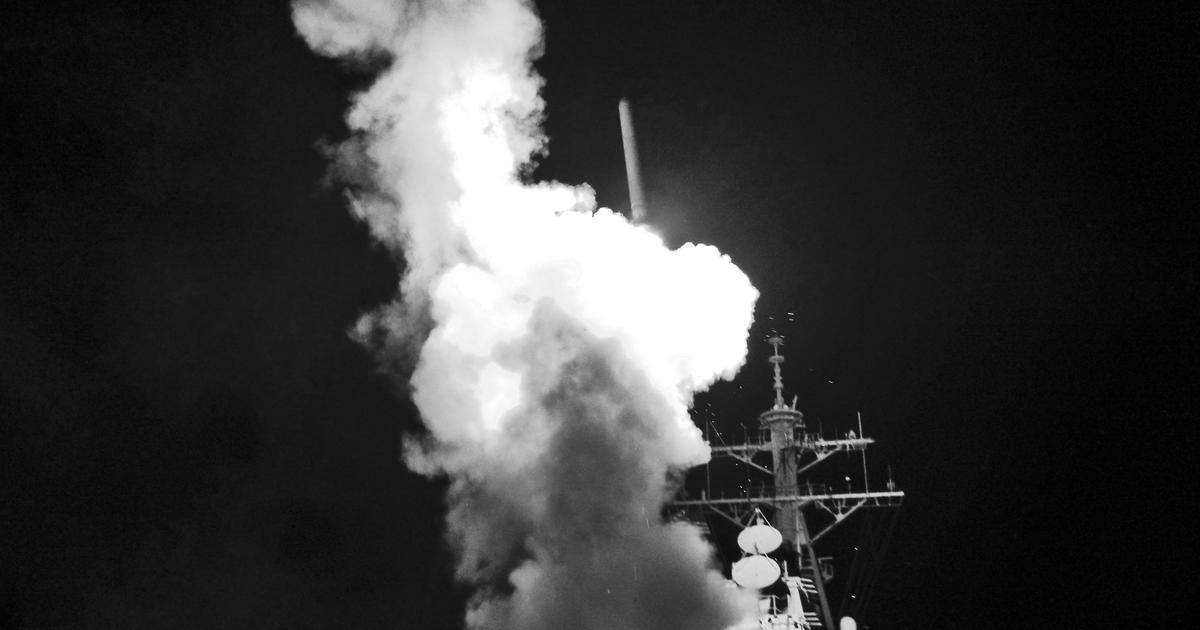
    Germany will buy American Tomahawk cruise missiles and station them on German soil — a deal agreed behind closed doors at the NATO summit in Ankara and kept under wraps for days before Chancellor Friedrich Merz confirmed it in the Bundestag on Thursday. It is one of the most consequential German arms purchases in decades, and a first: no country outside the United States has ever operated the ground-launched version of the weapon.

    The deal at a glance
    • What: Germany buys U.S.-made Tomahawk cruise missiles plus ground-based Typhon launchers, to be stationed in Germany.
    • Scale: Reportedly up to 400 Tomahawk Block Vb missiles worth more than $1 billion — exact numbers are classified.
    • Range: Over 1,600 km, enough to reach targets deep inside Russia from German territory.
    • When agreed: A letter of intent was signed on Tuesday at the NATO summit in Ankara — and stayed secret until Thursday.
    • What’s next: Formal U.S. export approval is expected in August.

    A deal that stayed secret for days

    The agreement was reached on the sidelines of the NATO summit in Ankara on July 7–8, where a letter of intent was signed on Tuesday, according to German government sources cited by Reuters and Der Spiegel. Neither Berlin nor Washington said a word publicly until Merz stood before the Bundestag two days later.

    “This will close an important strategic gap in our defense,” the chancellor told parliament, “and at the same time, we will work to develop our own European systems and station them in Europe.”

    The secrecy was no accident. Washington had rebuffed earlier German attempts to buy the weapon, and the Kremlin had lobbied hard against the sale, arguing it would be a dangerous escalation. Announcing the deal only once it was signed left no room for it to be talked down.

    What Germany is buying

    The Tomahawk is America’s best-known cruise missile: a subsonic, precision-guided weapon that flies at around 30 metres above the ground to evade radar, with a range of well over 1,600 kilometres. Berlin is reportedly seeking up to 400 missiles of the newest Block Vb variant, which carries a multi-effects warhead and can be re-targeted mid-flight via a two-way datalink.

    To fire them from land, Germany will also buy the U.S. Army’s Typhon launcher — a containerised, truck-mobile system that can also fire the SM-6 missile and, in future, hypersonic weapons. How many launchers and missiles the Bundeswehr will actually procure, and when they will arrive, remains classified.

    The purchase is a leap in capability. The German army’s longest-range missile artillery today, the MARS II rocket launcher, reaches about 70 kilometres. The Tomahawk multiplies that reach more than twentyfold — from Germany, it puts targets deep inside Russia within range.

    From hosting American missiles to owning them

    The deal marks a sharp change of course. In 2024, then-Chancellor Olaf Scholz and President Joe Biden agreed that the United States would station Tomahawks and other long-range missiles in Germany from 2026, operated by a U.S. Army task force. That plan effectively collapsed this spring amid a rift between Berlin and Washington, when the Pentagon shelved the deployment and announced the withdrawal of 5,000 U.S. troops from Germany.

    Buying the missiles outright means Germany no longer depends on an American deployment decision that can be reversed. It is also a vote of limited confidence in long-term U.S. security guarantees: Merz has framed the purchase explicitly as an interim solution until European alternatives exist. Germany is part of the Franco-led ELSA programme for a European long-range missile planned for the 2030s, and has a separate project with the United Kingdom for a strike weapon with a range beyond 2,000 kilometres.

    Echoes of the 1980s

    For Germans with long memories, ground-launched Tomahawks are a loaded symbol. An earlier version of exactly this weapon — the BGM-109G Gryphon — was stationed in West Germany in the 1980s and drew some of the largest protests in the country’s history, before the 1987 INF Treaty banned the entire category of land-based intermediate-range missiles.

    That treaty is gone: the United States withdrew in 2019, citing Russia’s deployment of the prohibited 9M729 cruise missile, and Moscow has since fielded new intermediate-range weapons, including the Oreshnik ballistic missile used against Ukraine. It is this arsenal — and the absence of any European counterweight to it — that Berlin calls the “strategic gap.”

    What it means for people living in Germany

    Nothing changes in daily life, but the political debate will be loud. Expect arguments over where the launchers will be based (no locations have been named), what the purchase means for the defence budget, and whether the missiles deter Russia or provoke it — the same dispute that filled German streets four decades ago. The Left Party and parts of the SPD have long opposed stationing long-range missiles in Germany; the government’s counter-argument is that deterrence prevents war rather than inviting it.

    The next milestone comes in August, when the formal U.S. export approval is expected. Only then will Berlin say more about numbers, cost and timelines — if it says anything at all.


    Reporting based on Der Spiegel, Reuters, Bloomberg and The War Zone.

    Understand Germany, in plain English. Sign up for The New German newsletter for the news that matters to internationals living here.

  • How to Register Your Address in Germany (Anmeldung)

    How to Register Your Address in Germany (Anmeldung)

    Before you can open a bank account, get paid, or apply for a residence permit, Germany needs to know where you live. That is the Anmeldung — your official address registration — and it is the single most important thing to sort out when you arrive. This guide walks you through the deadline, the documents, and how to actually get an appointment.

    Quick facts

    • What it is: Official registration of your home address at the local Bürgeramt (citizens’ office).
    • Deadline: Within 14 days of moving into your accommodation.
    • Fine for missing it: Up to €1,000 (rarely charged if you can show you tried to book).
    • What you get: The Anmeldebestätigung (also called Meldebescheinigung) — your proof of registration.
    • Cost: Free.

    What is the Anmeldung and why does it matter?

    Everyone who lives in Germany — citizens, EU nationals and non-EU arrivals alike — must register their home address with the local authority. The Anmeldung is not optional paperwork you can skip: it unlocks nearly everything else in German life.

    Without your registration confirmation you cannot:

    • receive your tax ID (Steuer-ID), which your employer needs to pay you correctly;
    • open most German bank accounts;
    • apply for or collect your residence permit at the Ausländerbehörde;
    • sign up for many phone, internet or insurance contracts.

    In short, the Anmeldung is the key that turns on the rest of the system.

    The 14-day deadline

    The clock starts the day you move into your accommodation — not when you land, and not when you sign your rental contract, but when you actually start living there. You then have 14 days to register.

    Missing the deadline can in theory cost you a fine of up to €1,000. In practice, officials are usually understanding if appointments are simply unavailable and you can show you tried to book one promptly. Take screenshots of your booking attempts just in case.

    Documents you need to bring

    Getting the paperwork right is what saves you a wasted trip. Bring:

    1. Your passport or national ID. EU/EEA citizens can use a national ID card; non-EU nationals must bring a passport.
    2. The Wohnungsgeberbestätigung (landlord confirmation). This is the most important — and most commonly forgotten — document. It is a specific form your landlord signs to confirm you have moved in. A signed rental contract on its own is usually not enough. Your landlord is legally required to give you this form, so ask for it early.
    3. The completed Anmeldung form. You can usually download it from your city’s website in advance.
    4. Your rental contract (helpful as backup, though not always required).

    If you are registering family members, bring their documents too — and a marriage or birth certificate if requested.

    Registering a whole family

    One appointment can usually cover everyone living at the address. Bring each person’s passport and, where relevant, marriage or birth certificates so the office can link the household correctly.

    How to get a Bürgeramt appointment

    This is the part that tests everyone’s patience, especially in Berlin, Munich and Hamburg, where slots disappear within minutes. A few tactics that work:

    • Book online early in the morning. New appointment slots are often released just after midnight or first thing in the morning.
    • Check every few hours. Cancellations reopen slots throughout the day.
    • Look beyond your district. Most cities let you register at any Bürgeramt, not just your local one — a less central office may have space next week.
    • Consider a paid booking service if your visa deadline is tight and you simply cannot find a slot.

    At the appointment itself, hand over your documents, sign the form, and you will walk out the same day with your Anmeldebestätigung. Keep several copies — you will be asked for it again and again.

    After the Anmeldung: what happens next

    A week or two after you register, a letter arrives with your tax ID (Steuer-ID). With your Anmeldebestätigung and tax ID in hand you can then open a bank account, finalise your health insurance, and complete your residence permit. Each step depends on the one before — which is exactly why the Anmeldung comes first.

    Frequently asked questions

    Do I need health insurance before I register? No. You do not need proof of insurance for the Anmeldung itself, though you will need it very soon afterwards for your job, university or residence permit.

    Can I register without a permanent flat? You need an address where you genuinely live and a landlord willing to sign the Wohnungsgeberbestätigung. Some temporary landlords and serviced apartments will provide it; many Airbnb hosts will not — check before you book.

    What if I move to a new address later? You simply re-register (Ummeldung) at your new address, again within 14 days. Moving abroad requires a de-registration (Abmeldung).

    Is the Anmeldung really free? Yes. The registration itself costs nothing. Only optional paid appointment-booking services charge a fee.


    New to Germany? This is the first guide in our How to Germany series. Read next: How to Get Your German Tax ID (Steuer-ID) and How to Open a Bank Account in Germany.

    Get the newcomer’s checklist. Sign up for The New German newsletter and we’ll send you the essential first-month steps, in plain English.