Friday, July 17, 2026 · 02:53 CEST · Berlin

Tag: Climate

  • DWD Warns of More Severe Storms After Heavy Hail Damages Northern Germany

    DWD Warns of More Severe Storms After Heavy Hail Damages Northern Germany

    A severe storm front brought golf ball-sized hail, heavy rain and gusts to northern Germany on Monday, damaging cars, roofs and a printing plant, and briefly halting operations at an airport. Germany’s national weather service, the Deutscher Wetterdienst (DWD), is now warning of further severe storms across large parts of the country today and into the coming days.

    The storms at a glance

    • Worst hit: Western Mecklenburg-Vorpommern and parts of Lower Saxony saw the heaviest hail and storm damage on Monday.
    • Response: Fire crews in the Hannover region alone were called out around 1,000 times.
    • Airport disruption: Hannover-Langenhagen airport paused check-in for about an hour on Monday evening for safety reasons.
    • Also affected: Heavy rain triggered around 115 fire brigade call-outs in the Gütersloh district of North Rhine-Westphalia.
    • Outlook: DWD warns of renewed severe thunderstorms today, especially in Saxony, Saxony-Anhalt and Thuringia, with unsettled weather expected in the days ahead.

    Hail and flooding hit the north hard

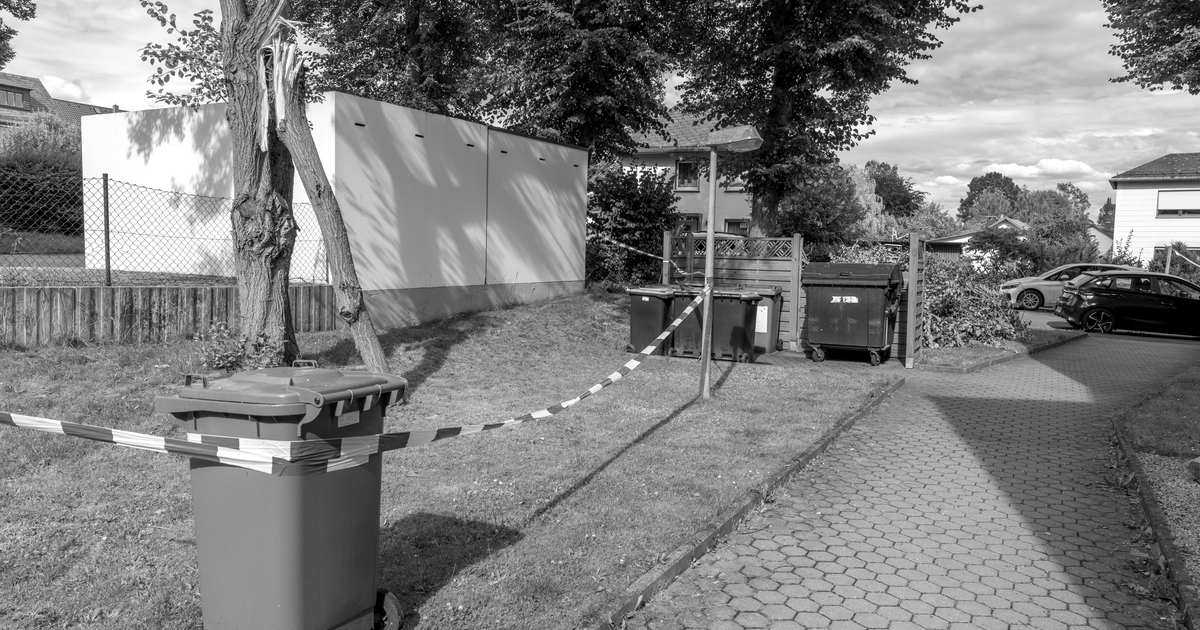
    A thunderstorm system carrying heavy rain, hail and storm gusts moved across western Mecklenburg-Vorpommern and parts of Lower Saxony on Monday afternoon and into the night, triggering numerous fire brigade call-outs. In Tostedt, south of Hamburg, golf ball-sized hailstones smashed car windows and dented bodywork, and dozens of roofs were damaged, a fire service spokesperson said. Streets flooded and many cellars filled with water.

    In the Hannover region alone, the fire brigade had to respond around 1,000 times. Hannover-Langenhagen airport suspended check-in for roughly an hour on Monday evening as a safety precaution, according to an airport spokesperson.

    In Wittenburg, in Mecklenburg-Vorpommern, firefighters brought in wheel loaders to clear piles of hail from the streets. Storm damage at a local printing plant meant several regional newspapers could not be printed on time, or at all. Fallen trees were reported in many areas, including near Ludwigslust-Parchim.

    Storm damage spreads to North Rhine-Westphalia

    Heavy rain also caused widespread disruption in North Rhine-Westphalia, particularly in the Ostwestfalen-Lippe region. The district fire brigade in Gütersloh said crews had been called out around 115 times in and around the town of Verl since Monday evening. In Bielefeld, the city fire brigade reported a roof truss fire believed to have been caused by a lightning strike.

    DWD: more storms on the way

    The DWD is forecasting further strong thunderstorms today and into tonight across parts of Germany. Saxony, Saxony-Anhalt and Thuringia are expected to see the most severe conditions, but localised heavy rain is also possible in Lower Saxony during the day.

    In western and southwestern Germany, the DWD is separately warning of “strong heat stress” in some areas. From central to southern Germany, forecasters expect potentially strong thunderstorms bringing heavy rain, storm gusts and hail, with isolated risk of extreme heavy rain, severe hail and damaging gusts.

    According to the DWD, the thunderstorms are likely to clear only slowly, meaning severe local storms remain possible overnight. The agency expects the unsettled, turbulent weather pattern to continue in the days that follow.

    What it means for people living in Germany

    If you live in or are travelling through the warned regions, it is worth checking the DWD’s official warning map or the free NINA warning app before heading out, especially if you plan to drive or fly. Severe thunderstorm warnings (Unwetterwarnung) mean you should avoid parking under trees, secure loose items like patio furniture, and postpone travel where possible until the worst has passed.

    • Check flight status directly with your airline if flying via an affected airport, as ground operations can be paused at short notice.
    • If hail or storm damage affects your car or home, photograph the damage immediately and report it to your insurer (Hausratversicherung for household contents, Kfz-Versicherung for vehicles) as soon as possible.
    • Renters should notify their landlord promptly if a storm causes damage to windows, roofs or balconies.

    Understand Germany, in plain English. Sign up for The New German newsletter for the news that matters to internationals living here.
  • Germany Faces Highest Wildfire Warning Level This Weekend

    Germany Faces Highest Wildfire Warning Level This Weekend

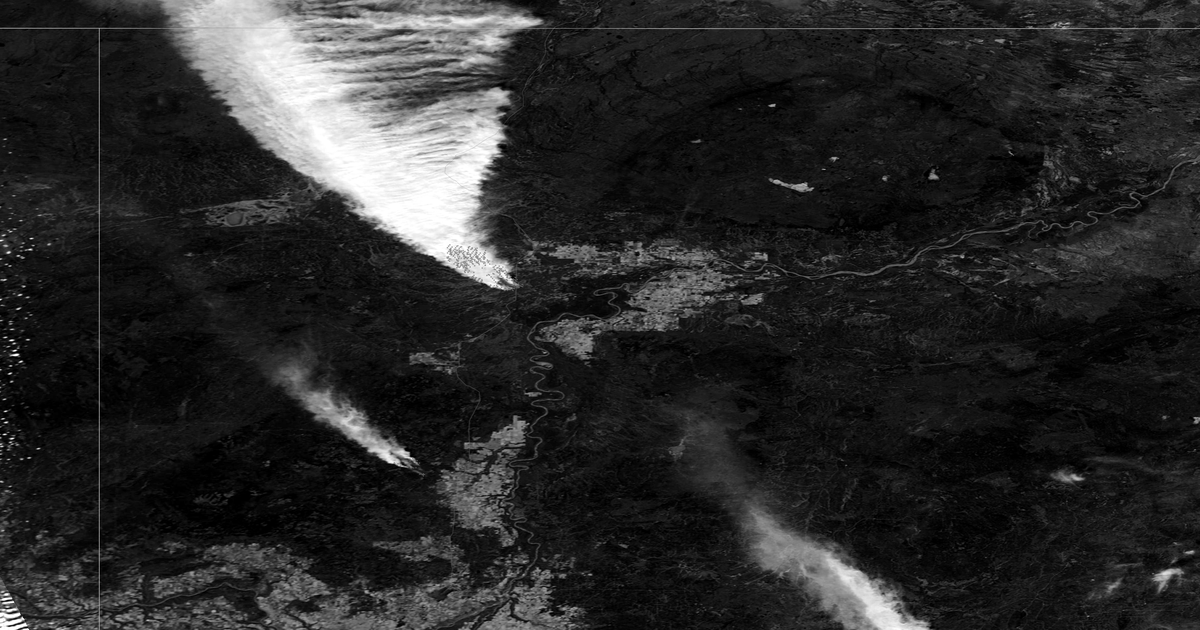
    Forest fire danger is rising sharply across Germany this weekend. The German Weather Service (Deutscher Wetterdienst, DWD) says parts of the southwest will reach warning level five — the highest on its scale — as a heatwave grips the region. The risk is expected to spread further east and north into Sunday.

    The wildfire risk at a glance

    • Highest level (5): forecast for Saturday along the border area between Baden-Württemberg, Rhineland-Palatinate and France, where temperatures are currently highest.
    • Level 4: covers nearly all of Baden-Württemberg, southern Rhineland-Palatinate, southern Hesse and northern Bavaria until Tuesday, plus pockets of western North Rhine-Westphalia and eastern Brandenburg.
    • Level 3 (“medium risk”): applies to most of the rest of the country.
    • Sunday: the high-risk zone widens to include southern Baden-Württemberg and the outskirts of Berlin, while a diagonal band from the northwest to the southeast sees lower risk.

    Where the risk is highest

    According to DWD maps, larger and larger areas turn red on the forest fire danger index as the weekend goes on. The southwest is affected first, with the north-east following later. On Saturday, the greatest danger is at the border between Baden-Württemberg and Rhineland-Palatinate and the French border, an area currently experiencing especially high temperatures. Level four, one step below the maximum, applies across almost all of Baden-Württemberg, southern Rhineland-Palatinate, southern Hesse and northern Bavaria through Tuesday, along with isolated areas in western North Rhine-Westphalia and eastern Brandenburg.

    By Sunday, the danger zone expands further. In addition to the French border region, the DWD also classifies the southern part of Baden-Württemberg and the outer districts of Berlin as high-risk areas. A diagonal stretch of the country running from the northwest to the southeast shows comparatively lower risk on the same day.

    Why fires are becoming more common

    Germany’s rising wildfire risk comes as southern European countries, including Spain and France, battle serious forest fires of their own. A fire in southern Spain killed at least a dozen people, one of the deadliest in the country’s recorded history, after a severe heatwave swept across much of Europe.

    Wildfires have killed hundreds of people across Europe over the past decade, and scientists expect that toll to grow. Europe is the fastest-warming continent on Earth: since the 1980s, temperatures there have risen at roughly twice the global average, according to the EU’s Copernicus climate programme. Globally, 2025 was the third-hottest year on record. Researchers warn that climate change is making regions more vulnerable to forest fires.

    What it means for people living in Germany

    If you live in or are travelling through the affected regions — particularly the southwest, Bavaria, or the edges of Berlin and Brandenburg — it is worth checking the DWD’s forest fire danger index (Waldbrandgefahrenindex) before heading into wooded or rural areas over the weekend.

    • Avoid open flames, barbecues, and discarded cigarettes in or near forests and dry grassland — these are common causes of wildfires.
    • Follow any local fire bans or restrictions announced by municipal authorities or forestry offices.
    • If you spot smoke or fire, call the fire brigade on 112 immediately rather than assuming someone else has already reported it.
    • Be cautious with vehicles and machinery in rural areas, as hot exhaust parts can ignite dry vegetation.

    Data cited from the Deutscher Wetterdienst (German Weather Service) and the EU’s Copernicus climate programme.

    Understand Germany, in plain English. Sign up for The New German newsletter for the news that matters to internationals living here.

  • Germany’s June Heatwave Killed an Estimated 5,100 People

    Germany’s June Heatwave Killed an Estimated 5,100 People

    The heatwave that pushed temperatures above 40°C across Germany in late June killed an estimated 5,100 people, according to the Robert Koch Institute (RKI), the country’s federal public health agency. That is already far more than Germany typically records in an entire year — and the summer is not over: the next heatwave is forecast for the coming days.
    The numbers at a glance
    • Estimated heat deaths since mid-June: about 5,100 (RKI; range 4,410–5,850 for April to June 28).
    • Deadliest week: June 22–28 alone accounted for roughly 4,310 deaths.
    • For comparison: Germany averaged about 2,900 heat-related deaths per whole year from 2023 to 2025.
    • Most affected: people over 75 — around 2,950 of the dead were 85 or older; more women than men.
    • June 2026: the second-warmest June ever recorded in Germany, with peaks above 41°C.

    More deaths in two weeks than in entire previous years

    The RKI’s latest heat-mortality reports show how exceptional the late-June heat was. In the same April-to-June period, the institute estimated 560 heat-related deaths in 2025, 470 in 2024 and 810 in 2023. This year’s figure of around 5,100 is roughly seven times the highest of those — and it was reached before July had even begun. The true toll may be higher still. The Federal Statistical Office counted 6,800 excess deaths in the week of June 22–28 alone, using a different method. The RKI itself notes that its model may understate the impact, and that figures for recent weeks can still rise as late death reports come in. Heat rarely appears on a death certificate. In most cases, extreme temperatures act together with existing conditions — heart disease, respiratory illness — which is why the death toll has to be estimated statistically, from mortality data and temperature readings at 52 weather stations.

    Who is most at risk

    The victims were overwhelmingly elderly. Of the estimated deaths up to June 28, around 2,950 were people aged 85 or older, 1,320 were between 75 and 84, 550 between 65 and 74, and about 300 were under 65. More women than men died — largely because women make up a larger share of the oldest age groups. Researchers stress that deaths are only part of the picture. “Heat is a relevant health risk factor, especially for older people, people with pre-existing conditions, pregnant women, but also for people working outdoors,” said Alexandra Schneider of Helmholtz Munich. Veronika Huber of the Spanish research council CSIC called the deaths “the tip of the iceberg,” pointing to overcrowded emergency rooms and overstretched ambulance services on hot days.

    A June of records

    June 2026 was Germany’s second-warmest June since records began, behind only 2019, according to the German Weather Service (DWD). The final week brought several extremes at once: temperatures above 41°C were measured repeatedly, 46 weather stations broke the 40°C mark on June 27, and the night of June 27–28 was provisionally the warmest night ever recorded in Germany. The nationwide mean temperature that week was 26.4°C — far above the threshold at which heat-related mortality rises sharply.

    Hospitals and care homes under pressure

    The German Foundation for Patient Protection criticised how poorly prepared hospitals and nursing homes are for extreme heat — many lack even basic external shading. Its chairman, Eugen Brysch, called for a €30 billion federal investment programme to make medical and care facilities heat-proof. “Heat protection plans end where patient protection costs money,” he said.

    What it means for people living in Germany

    If you are new to Germany, two things are worth knowing. First, air conditioning is rare here: most flats, offices, care homes and even hospitals do not have it, so buildings heat up and stay hot — especially top-floor flats under the roof. Second, forecasters already see the next heatwave arriving within days. The standard advice from German health authorities: drink water regularly before you feel thirsty, keep windows and blinds closed during the day and air the flat at night, avoid exertion in the midday heat, and never leave children or pets in a parked car. Check in on elderly neighbours or relatives — the people dying in these statistics are mostly over 75 and often live alone. Signs of heatstroke (confusion, hot dry skin, loss of consciousness) are a medical emergency: call 112.
    Reporting based on RKI heat-mortality reports and dpa reporting published by FAZ, t-online and Tagesspiegel. Understand Germany, in plain English. Sign up for The New German newsletter for the news that matters to internationals living here.