
Friday, July 17, 2026 · 01:38 CEST · Berlin

Tag: Politics

  • Germany and Austria to Keep Border Controls in Place

    Germany and Austria to Keep Border Controls in Place

    Germany and Austria will keep controls at their shared border in place for now. Interior ministers Alexander Dobrindt (CSU) and Gerhard Karner (ÖVP) confirmed the decision after talks in Berlin, saying the checks will stay until the effects of the European Union’s new asylum reform become clearer.

    The border controls at a glance

    • Since: Germany introduced border checks with Austria in 2015 and has since extended them to all its neighbouring countries.
    • Decision: Germany and Austria will keep the checks for now, interior ministers Alexander Dobrindt and Gerhard Karner said on 15 July 2026.
    • Reason given: Berlin wants to see the effects of the EU’s asylum reform, which took effect in June 2026, before considering changes.
    • EU position: The European Commission recommended in June that internal EU border controls be phased out.
    • Legal challenges: German courts have ruled some individual border checks unlawful.

    Why the checks are staying

    Dobrindt described the controls as functional, well coordinated between the two countries and doing an outstanding job. Karner said the checks were one of the measures that had helped reduce illegal migration into Austria and Germany. Both ministers stressed that Germany’s border checks now cover all of its neighbouring countries, not just Austria, a policy in place since 2015.

    Dobrindt said all sides have an interest in internal border checks eventually becoming unnecessary, but that the right conditions are not yet in place. He linked the checks to two things: a functioning European asylum system and effective protection of the EU’s external border. He also pointed to a separate, ongoing challenge — the integration of migrants already living in Germany, which he said remains unfinished work.

    Pressure from Brussels to end the checks

    The European Commission recommended in June 2026 that EU countries dismantle internal border controls, pointing to the bloc’s new asylum reform, which took effect the same month. Under EU rules, checks at internal borders are only meant to be allowed in exceptional cases and for a limited time. German courts have already ruled some individual border checks unlawful.

    Germany has pushed back against the Commission’s recommendation, arguing that the state and society still carry an elevated burden from the high number of people who arrived seeking refuge since 2015. The government says this justifies keeping the checks in place for now, despite the general EU rule that such controls should be temporary.

    What it means for people living in Germany

    If you regularly cross the German-Austrian border — for work, study or family visits — the practical situation does not change. Checks will continue, so it is worth building in extra time for delays and always carrying a valid passport or ID card, even on routes where checks feel routine or infrequent. The same applies at Germany’s other land borders, where similar controls have been in place since 2015.

    • Carry a passport or national ID card whenever you cross into or out of Germany, including on short trips.
    • Build extra time into your journey around border crossings, especially during busy travel periods.
    • If you are asked to show documents, this is a routine part of the ongoing checks, not a sign of a new policy.

    Understand Germany, in plain English. Sign up for The New German newsletter for the news that matters to internationals living here.

  • Germany to Cut Child Maintenance Advance at Age 16, Coalition Partners Push Back

    Germany to Cut Child Maintenance Advance at Age 16, Coalition Partners Push Back

    Germany’s Family Minister Karin Prien (CDU) plans to cut the state child maintenance advance (Unterhaltsvorschuss), the payment that steps in when a separated parent fails to pay child support. Under her proposal, the state would stop paying once a child turns 16, two years earlier than the current cut-off of 18. The plan has drawn sharp criticism from opposition parties and open resistance from the CDU’s own coalition partner, the SPD.

    The Unterhaltsvorschuss cut at a glance

    • What changes: Payments would stop at a child’s 16th birthday instead of the 18th.
    • Who is affected: The Family Ministry estimates around 80,000 children.
    • Money at stake: Families could lose up to €394 a month per child aged 16 to 18, according to the association for single parents.
    • Why it’s happening: Costs have quadrupled since a 2017 reform extended payments to age 18, and states and municipalities want relief.
    • Status: No bill has been introduced yet; the ministry says a draft is coming soon, but the SPD says it will demand changes.

    What is the Unterhaltsvorschuss?

    The Unterhaltsvorschuss is a state advance payment for single parents whose ex-partner pays no child support, or not enough. The state pays the money to the parent raising the child, then tries to recover it from the parent who owes it. A 2017 reform extended eligibility from age 12 up to a child’s 18th birthday. Since then, according to the report, the cost of the programme to the state has quadrupled, prompting states (Länder) and municipalities to push for cuts.

    What the ministry is proposing

    A spokesperson for the Family Ministry, Dominik Lenz, confirmed that Minister Prien intends to bring forward a bill “very soon” that would end payments at a child’s 16th birthday rather than the 18th. The ministry estimates that about 80,000 children would ultimately be affected by the change. At the same time, the ministry wants to increase pressure on parents who fail to pay child support: Lenz said the ministry is considering a temporary driving ban (Fahrverbot) for parents who repeatedly fall behind on payments.

    Criticism from opposition and single-parent groups

    The plan has drawn some of the sharpest criticism the ministry has faced this year. At a press conference in Berlin, Left Party co-chair Ines Schwerdtner accused the minister of losing touch with reality, calling the planned cuts a “horror message” for single parents and their children. She argued that nearly half of all single parents in Germany are at risk of poverty and said they should not be asked to plug budget gaps that, in her view, should instead be closed by taxing billionaires more fairly.

    Green Party co-leader Franziska Brantner said the government appeared to be balancing its budget “on the backs” of families and single parents, instead of closing inheritance tax loopholes.

    Daniela Jaspers, chair of the Association of Single Mothers and Fathers (Verband alleinerziehender Mütter und Väter), told public broadcaster MDR that “the ones who suffer are the children,” who would no longer receive the support they are entitled to. She calculated that families could lose up to €394 a month for children aged 16 to 18.

    Resistance inside the coalition

    Opposition to the plan is not limited to opposition parties. Within the SPD, the CDU’s coalition partner, Mecklenburg-Vorpommern’s state premier Manuela Schwesig has rejected the proposal. Truels Reichardt, the SPD Bundestag faction’s spokesperson on children’s issues, also spoke out against it, saying the party would need to “rework” any bill once it reaches parliament. That leaves it open whether the reform will pass in the form the Family Ministry currently plans.

    What it means for people living in Germany

    If you are a single parent in Germany relying on Unterhaltsvorschuss, or expect to need it, this proposal is still a draft, not law. No bill has been formally introduced yet, and the SPD has already signalled it wants changes before any vote. If you currently receive the advance for a teenager, keep an eye on news from the Family Ministry over the coming months, and check with your local youth welfare office (Jugendamt), which administers the payments, for updates once the bill is published.


    Understand Germany, in plain English. Sign up for The New German newsletter for the news that matters to internationals living here.

  • Bundestag Approves Sweeping Expansion of Federal Police Powers

    Bundestag Approves Sweeping Expansion of Federal Police Powers

    The Bundestag has voted to sharply expand the powers of Germany’s federal police (Bundespolizei). The new Federal Police Act (Bundespolizeigesetz), passed on 10 July 2026, allows real-time facial recognition in specific danger situations, AI-assisted detection of suspicious movements, and suspicion-free identity checks in weapon and knife ban zones. The bill still needs approval from the Bundesrat, Germany’s upper house, after the summer break.

    The new Federal Police Act at a glance

    • Vote: Passed by the Bundestag on 10 July 2026 with votes from the CDU/CSU and SPD; the Left Party and the Greens voted against it, and the AfD abstained.
    • Who’s affected: Germany’s roughly 55,000 federal police officers, whose main rulebook has largely dated from 1994.
    • New tools: Real-time facial recognition in acute danger situations, AI-based detection of suspicious movement patterns, suspicion-free checks in knife ban zones, expanded phone surveillance, federal police-initiated deportation detention requests, and drone use plus counter-drone measures.
    • Next step: The Bundesrat must still approve the law after the summer break. Previous reform attempts failed there in 2021 and again under the last coalition government.

    Facial recognition, but only in emergencies

    Under the new law, federal police officers may use automatic real-time facial recognition within their jurisdiction, but only when there is a specific danger situation. The law names examples such as an acute threat to the security of the federal government or a state, or to a person’s life. One scenario cited during the debate: if the parents of an abducted child supply a photo, police could match it in real time against footage from cameras at airports and train stations.

    AI to spot dangerous movements, more checks at stations

    The law also allows federal police to use video technology combined with artificial intelligence to detect movement patterns that suggest a crime is underway, such as someone raising a fist, drawing a knife, or a person falling onto train tracks. Separately, in designated weapon and knife ban zones — often located at train stations — federal police will be able to carry out identity checks without needing a specific suspicion.

    More powers over phones, drones and deportations

    To fight extremism and people-smuggling crime, federal police gain new powers for phone surveillance, including source telecommunications surveillance (Quellen-Telekommunikationsüberwachung) — secretly reading communications on a device before it is encrypted. Identifying and locating mobile phone cards and devices will also become easier.

    Federal police will also be able to apply directly to a court for deportation detention (Abschiebehaft). This applies to foreign nationals who are required to leave Germany and have no toleration status (Duldung). The aim, according to the Federal Ministry of the Interior, is to stop people who have been stopped by police from being released and then going into hiding.

    The law additionally allows officers to fly their own drones for surveillance and reconnaissance, and to counter hostile drones using measures such as electromagnetic pulses, GPS jamming or physical intervention.

    Opposition raises legal concerns

    The Greens and the Left Party both voted against the bill. Green MP Irene Mihalic said there were legal doubts about the biometric real-time surveillance provisions. Left Party MP Clara Bünger warned the reform would make blanket surveillance the norm. The CDU’s Josef Oster accused the AfD, which abstained, of not having engaged with the details of the bill.

    What it means for people living in Germany

    If the Bundesrat approves the law after the summer break, internationals should expect more frequent identity checks at train stations and airports, particularly in areas marked as knife or weapon ban zones, where police will no longer need a specific reason to stop someone. Real-time facial recognition is limited by law to acute danger situations rather than routine use. People without a residence permit or toleration status (Duldung) who are required to leave the country face a faster path to deportation detention, since federal police can now request it directly from a court.

    • Carry valid ID when travelling through train stations and airports, especially in marked weapon and knife ban zones.
    • The law has not yet taken effect — it still needs the Bundesrat’s approval, expected after the summer break.
    • [VERIFY: exact list of designated weapon and knife ban zones and planned effective date once the Bundesrat votes]

    Reporting based on tagesschau.de, “Bundestag weitet Befugnisse von Bundespolizei deutlich aus,” 10 July 2026.

    Understand Germany, in plain English. Sign up for The New German newsletter for the news that matters to internationals living here.

  • Germany Issued 110,000 Family Reunification Visas in 2025

    Germany Issued 110,000 Family Reunification Visas in 2025

    Germany issued 110,388 family reunification visas in 2025, according to figures the federal government gave the Bundestag this month. In the first five months of 2026 alone, a further 43,739 were granted — a pace that, if it continued for the rest of the year, would land close to last year’s total.

    The numbers at a glance

    • 2025 (full year): 17,823 spousal visas granted to join German citizens; 92,565 other family reunification visas
    • 2026 (January–May): 7,946 spousal visas to join German citizens; 35,793 other family reunification visas
    • 2025 total: 110,388 family reunification visas issued
    • Source: Federal government answer to a parliamentary question from the AfD, published 10 July 2026

    What the figures cover

    The government’s answer, given in response to a parliamentary question from the AfD parliamentary group, splits family reunification visas (Familiennachzug) into two groups. The first is spousal visas issued specifically to join a German citizen (Ehegattennachzug zu deutschen Staatsbürgern) — that is, foreign nationals marrying or already married to a German passport holder. The second, larger category covers all other family reunification visas, which includes spouses and children joining foreign nationals already living in Germany, among other relatives.

    In 2025, spousal visas to German citizens made up a relatively small share of the total: 17,823 out of 110,388, or roughly one in six. The remaining 92,565 visas went to people joining family members who are themselves foreign nationals residing in Germany, such as skilled workers or people with residence permits.

    How 2026 compares so far

    The first five months of 2026 saw 7,946 spousal visas to German citizens and 35,793 other family reunification visas, for a combined 43,739. That is already close to 40 percent of the entire 2025 total after less than half the year — a pace that, extended across all twelve months, would put 2026 in a similar range to 2025, though the government’s figures only cover January through May and do not include a forecast for the rest of the year.

    The government’s answer does not give reasons for the numbers, and [VERIFY: whether processing delays, embassy capacity, or policy changes account for month-to-month variation] is not addressed in the response. It also does not break down the figures by country of origin or by consulate.

    What it means for people living in Germany

    If you are a foreign national married to a German citizen, or planning to bring a spouse, child, or other close relative to Germany, these figures are a reminder that the process runs through a German embassy or consulate abroad, not a local immigration office (Ausländerbehörde). Typical steps include booking an appointment at the relevant German mission, providing a valid marriage or birth certificate, and — for many spouse visas — proof of basic German language skills.

    • Start the visa application at the German embassy or consulate in your home country, not after arrival in Germany.
    • Check current language requirements and required documents with your local German mission, as these can vary by country and visa type.
    • Keep in mind that processing times were not published in this government answer; ask your embassy directly for current wait times [VERIFY: current processing times by location].

    The figures themselves don’t change any rules — they are a snapshot released in response to a parliamentary question. But they give a rare, concrete sense of scale for a process that affects tens of thousands of families every year.


    Reporting based on the German Bundestag’s press release “Zahl erteilter Visa zum Familiennachzug in 2025 und 2026” (hib 576/2026), published 10 July 2026, summarising the federal government’s answer to a parliamentary question from the AfD parliamentary group.

    Understand Germany, in plain English. Sign up for The New German newsletter for the news that matters to internationals living here.
  • Bundestag Passes Statutory Health Insurance Savings Bill – GKV

    Bundestag Passes Statutory Health Insurance Savings Bill – GKV

    Germany’s Bundestag voted on July 10, 2026 to approve a savings package for the statutory health insurance system (gesetzliche Krankenversicherung, or GKV) — a change that will mean higher medication co-payments and new limits on free family coverage for many insured members.

    Of 609 lawmakers who voted, 318 backed the bill from Health Minister Nina Warken (CDU), 284 voted against it, and four abstained. The package combines spending brakes on doctors’ practices, hospitals, pharmacies and the pharmaceutical industry with higher costs for insured members. The Health Ministry had projected a deficit of up to 19 billion euros for statutory insurers next year without the reform, and warned that contribution rates could otherwise rise by one percentage point in 2027.

    Under the final version, co-payments for medications rise from a range of 5 to 10 euros to a range of 7.50 to 15 euros, though a planned annual adjustment of that range was dropped. Free co-insurance for spouses will be restricted, but with wider exceptions than first proposed: it remains available for parents of children under 12, up from under 7 in the original draft. Starting in 2028, members whose partners no longer qualify for free co-insurance will pay a 2.5 percent contribution surcharge. Certain extra payments to doctors, such as for walk-in hours without an appointment, are being scrapped, and increases in hospital reimbursement will be capped.

    What this means for you: If you or a family member is in Germany’s statutory health insurance system, expect higher co-payments for prescription medicines, and check whether a spouse’s free co-insurance status is affected by the new age and income rules. The Bundesrat was due to debate the same bill on July 10; it cannot block the law but could delay it by sending it to a mediation committee.

  • Germany to Buy U.S. Tomahawk Missiles — a Deal That Stayed Secret for Days

    Germany to Buy U.S. Tomahawk Missiles — a Deal That Stayed Secret for Days

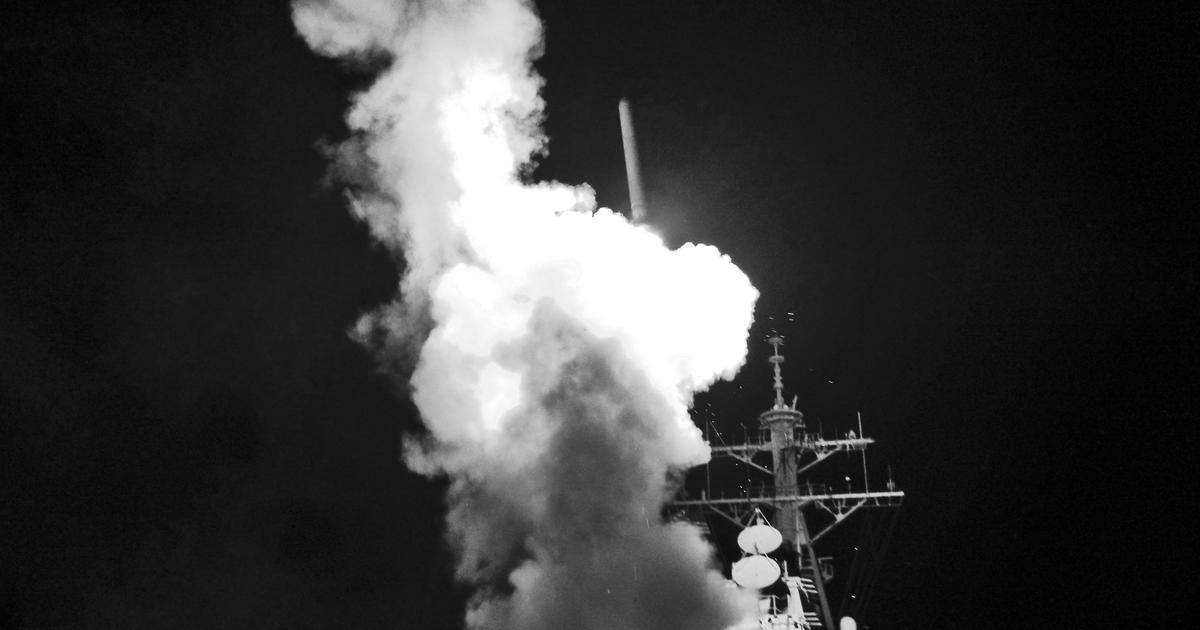
    Germany will buy American Tomahawk cruise missiles and station them on German soil — a deal agreed behind closed doors at the NATO summit in Ankara and kept under wraps for days before Chancellor Friedrich Merz confirmed it in the Bundestag on Thursday. It is one of the most consequential German arms purchases in decades, and a first: no country outside the United States has ever operated the ground-launched version of the weapon.

    The deal at a glance
    • What: Germany buys U.S.-made Tomahawk cruise missiles plus ground-based Typhon launchers, to be stationed in Germany.
    • Scale: Reportedly up to 400 Tomahawk Block Vb missiles worth more than $1 billion — exact numbers are classified.
    • Range: Over 1,600 km, enough to reach targets deep inside Russia from German territory.
    • When agreed: A letter of intent was signed on Tuesday at the NATO summit in Ankara — and stayed secret until Thursday.
    • What’s next: Formal U.S. export approval is expected in August.

    A deal that stayed secret for days

    The agreement was reached on the sidelines of the NATO summit in Ankara on July 7–8, where a letter of intent was signed on Tuesday, according to German government sources cited by Reuters and Der Spiegel. Neither Berlin nor Washington said a word publicly until Merz stood before the Bundestag two days later.

    “This will close an important strategic gap in our defense,” the chancellor told parliament, “and at the same time, we will work to develop our own European systems and station them in Europe.”

    The secrecy was no accident. Washington had rebuffed earlier German attempts to buy the weapon, and the Kremlin had lobbied hard against the sale, arguing it would be a dangerous escalation. Announcing the deal only once it was signed left no room for it to be talked down.

    What Germany is buying

    The Tomahawk is America’s best-known cruise missile: a subsonic, precision-guided weapon that flies at around 30 metres above the ground to evade radar, with a range of well over 1,600 kilometres. Berlin is reportedly seeking up to 400 missiles of the newest Block Vb variant, which carries a multi-effects warhead and can be re-targeted mid-flight via a two-way datalink.

    To fire them from land, Germany will also buy the U.S. Army’s Typhon launcher — a containerised, truck-mobile system that can also fire the SM-6 missile and, in future, hypersonic weapons. How many launchers and missiles the Bundeswehr will actually procure, and when they will arrive, remains classified.

    The purchase is a leap in capability. The German army’s longest-range missile artillery today, the MARS II rocket launcher, reaches about 70 kilometres. The Tomahawk multiplies that reach more than twentyfold — from Germany, it puts targets deep inside Russia within range.

    From hosting American missiles to owning them

    The deal marks a sharp change of course. In 2024, then-Chancellor Olaf Scholz and President Joe Biden agreed that the United States would station Tomahawks and other long-range missiles in Germany from 2026, operated by a U.S. Army task force. That plan effectively collapsed this spring amid a rift between Berlin and Washington, when the Pentagon shelved the deployment and announced the withdrawal of 5,000 U.S. troops from Germany.

    Buying the missiles outright means Germany no longer depends on an American deployment decision that can be reversed. It is also a vote of limited confidence in long-term U.S. security guarantees: Merz has framed the purchase explicitly as an interim solution until European alternatives exist. Germany is part of the Franco-led ELSA programme for a European long-range missile planned for the 2030s, and has a separate project with the United Kingdom for a strike weapon with a range beyond 2,000 kilometres.

    Echoes of the 1980s

    For Germans with long memories, ground-launched Tomahawks are a loaded symbol. An earlier version of exactly this weapon — the BGM-109G Gryphon — was stationed in West Germany in the 1980s and drew some of the largest protests in the country’s history, before the 1987 INF Treaty banned the entire category of land-based intermediate-range missiles.

    That treaty is gone: the United States withdrew in 2019, citing Russia’s deployment of the prohibited 9M729 cruise missile, and Moscow has since fielded new intermediate-range weapons, including the Oreshnik ballistic missile used against Ukraine. It is this arsenal — and the absence of any European counterweight to it — that Berlin calls the “strategic gap.”

    What it means for people living in Germany

    Nothing changes in daily life, but the political debate will be loud. Expect arguments over where the launchers will be based (no locations have been named), what the purchase means for the defence budget, and whether the missiles deter Russia or provoke it — the same dispute that filled German streets four decades ago. The Left Party and parts of the SPD have long opposed stationing long-range missiles in Germany; the government’s counter-argument is that deterrence prevents war rather than inviting it.

    The next milestone comes in August, when the formal U.S. export approval is expected. Only then will Berlin say more about numbers, cost and timelines — if it says anything at all.


    Reporting based on Der Spiegel, Reuters, Bloomberg and The War Zone.

    Understand Germany, in plain English. Sign up for The New German newsletter for the news that matters to internationals living here.